Browser & Device
User agents, browser fingerprinting, connection types, and what your browser reveals.

What Is cookieEnabled Fingerprinting? How Your Cookie Settings Reveal Your Identity
navigator.cookieEnabled is a single browser property that tells websites whether you have cookies enabled — and that yes/no answer quietly feeds your browser fingerprint.

What Is Do Not Track (DNT)? The Privacy Signal That Makes You More Trackable
Do Not Track was designed to stop online tracking — but enabling it can make your browser more unique and easier to fingerprint. Here's why privacy backfires.

Color Depth Fingerprinting: How screen.colorDepth Builds Your Profile
screen.colorDepth and screen.pixelDepth silently expose how many bits per pixel your display uses — a quiet but persistent piece of your browser fingerprint.

What Is WebGL Pixel Hash Fingerprinting? How Shaders Identify Your GPU
WebGL pixel hash fingerprinting renders a hidden GLSL shader and hashes the output pixels — exploiting GPU floating-point micro-differences that persist across browsers, incognito mode, and VPNs.

What Is Browser Fingerprinting? How Sites Track You Without Cookies
Browser fingerprinting combines your hardware, software, and browser settings into a unique identifier that tracks you across sites — even in private mode, without cookies.

What Is Canvas Fingerprinting? How Websites Track You Without Cookies
Canvas fingerprinting uses the HTML5 Canvas API to draw a hidden image whose pixel output uniquely identifies your browser — without storing anything on your device.

What Is WebGL Fingerprinting? How Your GPU Identifies Your Browser
WebGL fingerprinting reads your GPU vendor, model, and rendering output to create a device identifier that persists across browsers and survives clearing cookies.

What Is Audio Fingerprinting? How AudioContext Tracks Your Browser
Audio fingerprinting uses the Web Audio API to process a silent signal whose tiny floating-point variations uniquely identify your device — no cookies, no microphone, no permissions needed.

What Is Font Fingerprinting? How Installed Fonts Track You Online
Font fingerprinting detects which fonts are installed on your device using JavaScript — no cookies required. Learn how it works, who uses it, and how to protect yourself.

What Is Screen Fingerprinting? How Resolution and Pixel Ratio Identify Your Device
Screen fingerprinting reads your display resolution, devicePixelRatio, and color depth to build a persistent identifier — no cookies required, and it survives incognito mode.

What Is CPU Fingerprinting? How hardwareConcurrency Reveals Your Processor
CPU fingerprinting reads navigator.hardwareConcurrency to expose your logical core count — a stable, cookie-free signal that helps trackers identify your device across sessions.
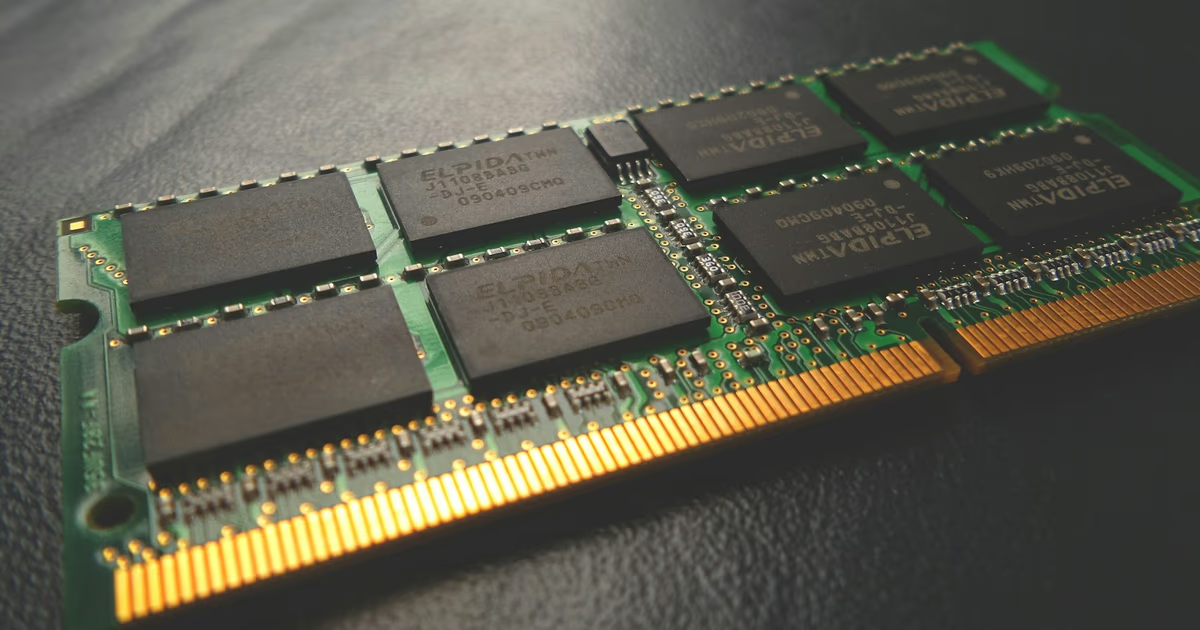
What Is Device Memory Fingerprinting? How navigator.deviceMemory Tracks You
navigator.deviceMemory exposes your RAM tier to every website you visit. Learn how this single JavaScript property contributes to browser fingerprinting — and why Firefox and Safari refuse to implement it.

What Is WebGL Vendor Fingerprinting? How Your GPU Brand Identifies You
WebGL vendor fingerprinting reads your GPU manufacturer and model name directly from the browser to create a persistent device identifier — no cookies needed.

navigator.platform Fingerprinting: How Websites Detect Your OS
navigator.platform is a JavaScript property that silently exposes your operating system to every website. Learn how it works, why it's still active despite deprecation, and how to defend against it.

Browser Storage Fingerprinting: How localStorage Tracks You
Browser storage fingerprinting uses localStorage, sessionStorage, IndexedDB, and cookies to build persistent identifiers that survive cookie deletion, private mode, and VPNs.
What Is Touch Fingerprinting? How maxTouchPoints Detects Your Device Type
Touch fingerprinting reads navigator.maxTouchPoints and touch event support to silently classify your device as mobile, tablet, or desktop — without cookies or storage.

Browser Language Fingerprinting: How navigator.languages Tracks You
navigator.languages silently exposes your full language preference list to every website you visit — and trackers use it to pin your identity without a single cookie.

What Is Your Network Timezone and How Is It Detected?
Your network timezone is derived from your IP address location. Learn how timezone detection works and why it matters for privacy and tracking.
What Is a User Agent? What Your Browser Reveals About You
Your user agent is a string your browser sends to every website you visit. Learn what it contains, why it matters for privacy, and what whatsmy.fyi can read from it.

What Is Your Connection Type? WiFi, 4G, Ethernet Explained
Your connection type (WiFi, 4G, Ethernet, etc.) affects speed, latency, and privacy. Learn how browsers detect connection types and what each means for your network.